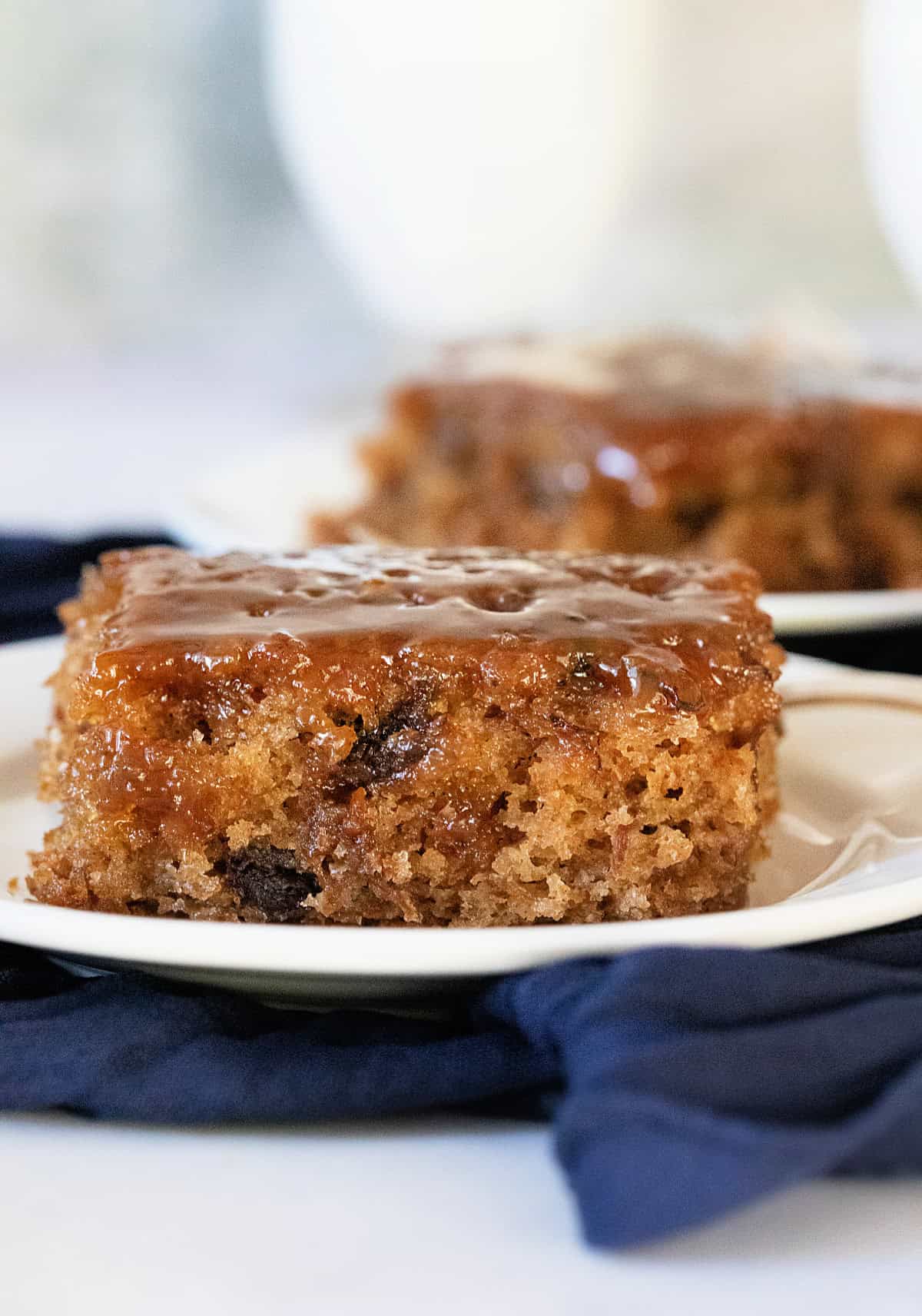
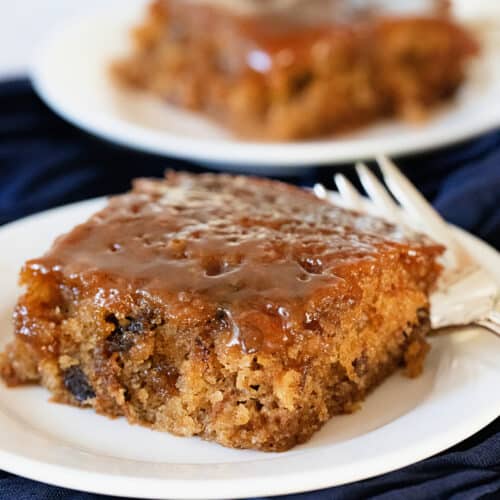
This old-fashioned prune cake is incredibly moist, warmly spiced, and topped with a rich buttermilk glaze that soaks into the warm cake. It’s an easy, comforting dessert that tastes even better than you might expect from its humble star ingredient.
Recipe updated August 2026 with new photos, process photos, and additional helpful tips. The original recipe remains unchanged.
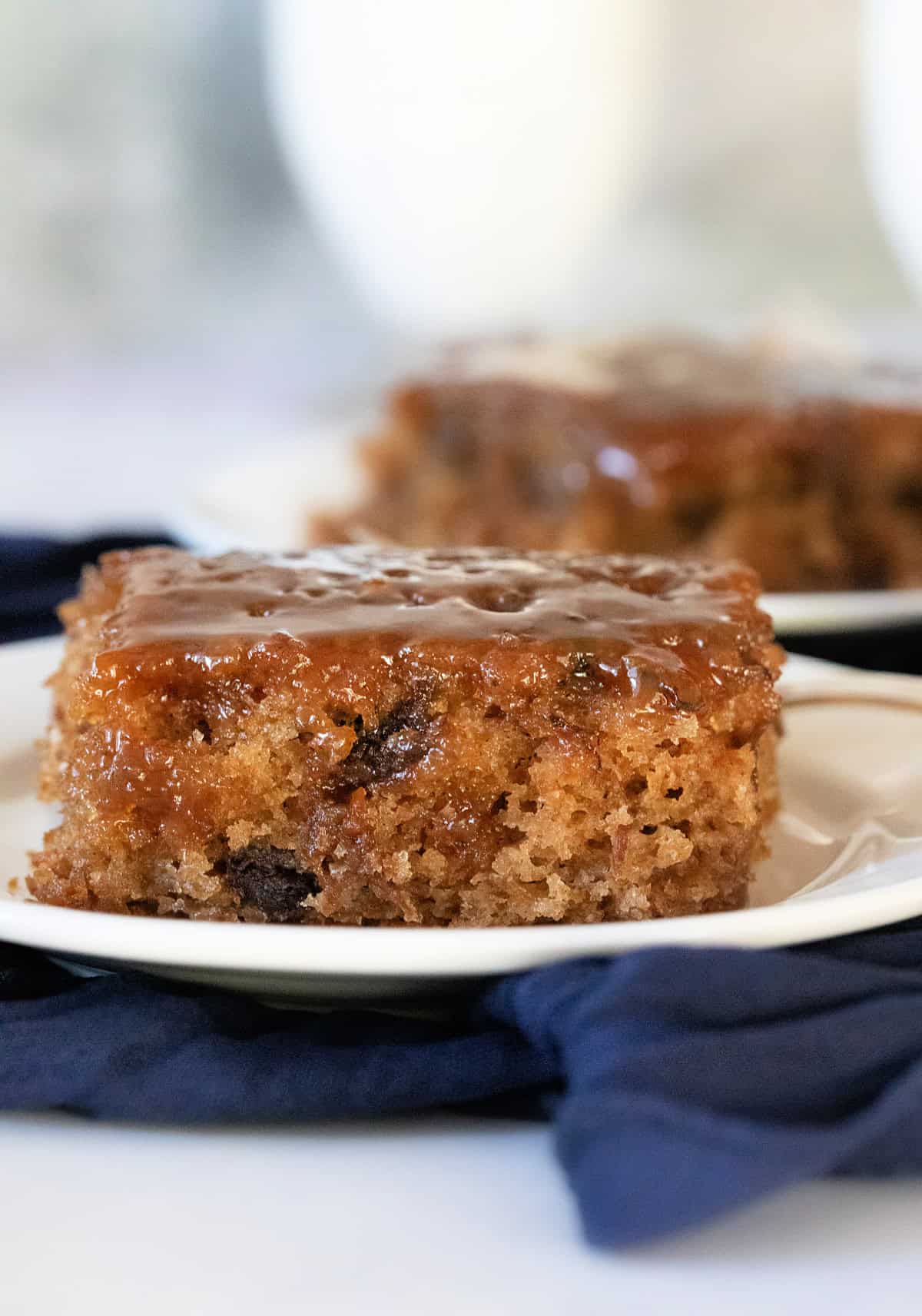
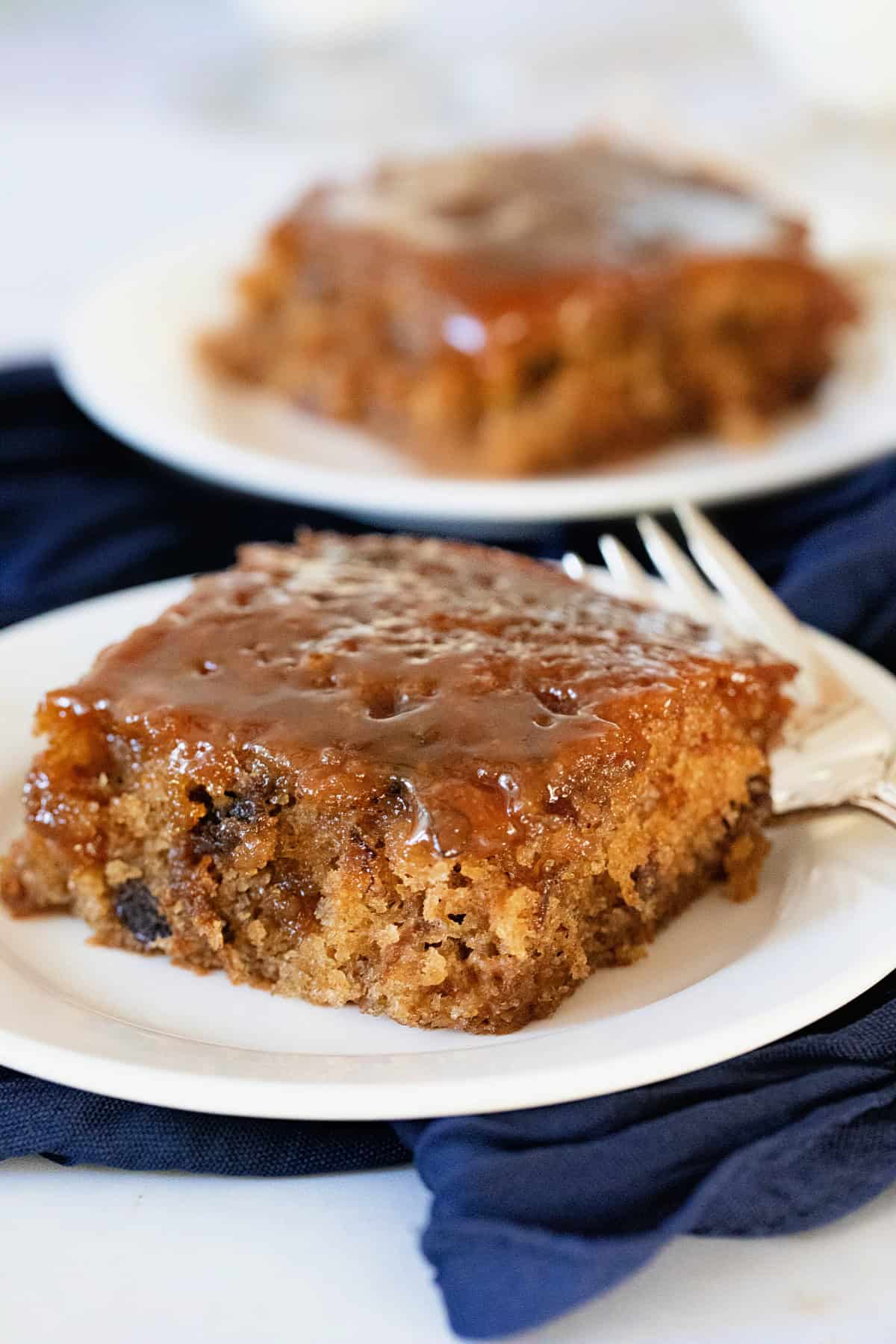
If you’ve never made a cake with prunes, this recipe might surprise you. Cooked prunes practically melt into the batter, adding natural sweetness and giving the cake an exceptionally moist, tender texture without making it taste strongly of prunes. Cinnamon, nutmeg, and allspice give it the flavor of an old-fashioned spice cake, and the warm buttermilk glaze poured over the top makes it especially delicious.
Why You’ll Love This Prune Cake
There’s a reason old-fashioned prune cake recipes have been around for generations. This one is simple to make, stays wonderfully moist, and that warm buttermilk glaze takes it over the top.
- Exceptionally moist: Cooked prunes add moisture and richness to the cake without making it heavy.
- Warmly spiced: Cinnamon, nutmeg, and allspice give the cake a cozy spice-cake flavor.
- Easy to make: The ingredients and method are straightforward, with no complicated decorating or layering.
- That buttermilk glaze: The warm glaze is poured over the freshly baked cake, creating a rich, sweet finish that soaks slightly into the top.
- Perfect for making ahead: The cake stays moist and delicious, making it a great dessert to prepare in advance.
How to Make Prune Cake
This prune cake recipe comes together easily, and cooking the prunes before making the batter is the key to getting that wonderfully moist texture.
Mix the Wet and Dry Ingredients
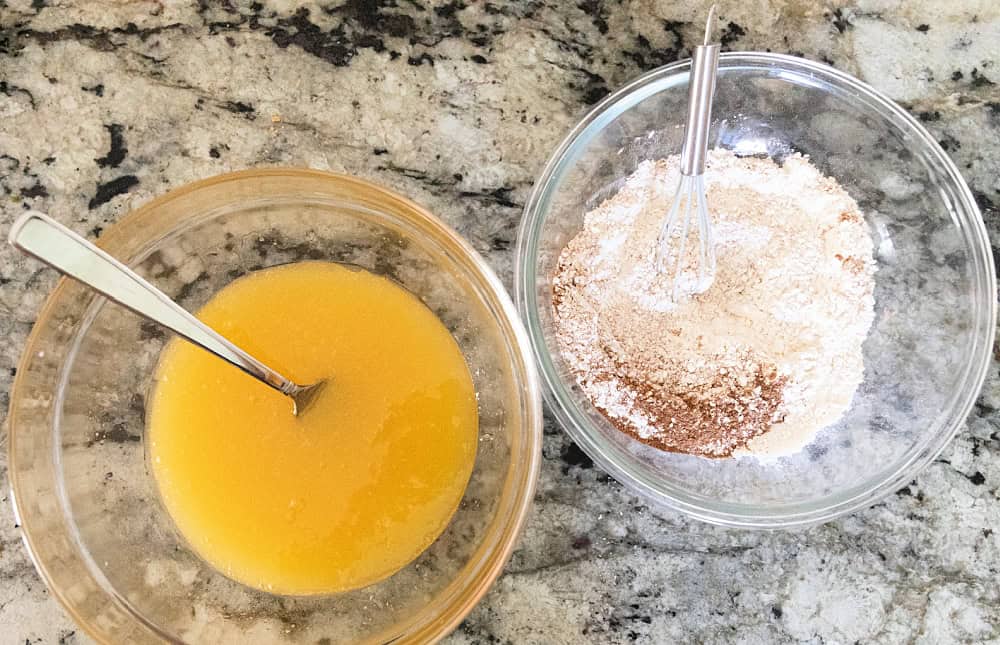
Mix the wet and dry ingredients: In a large mixing bowl, combine the oil, sugar, and eggs until well blended. In a separate bowl, whisk together the flour, baking soda, nutmeg, allspice, and cinnamon, making sure the baking soda and spices are evenly distributed.
Finish the Batter
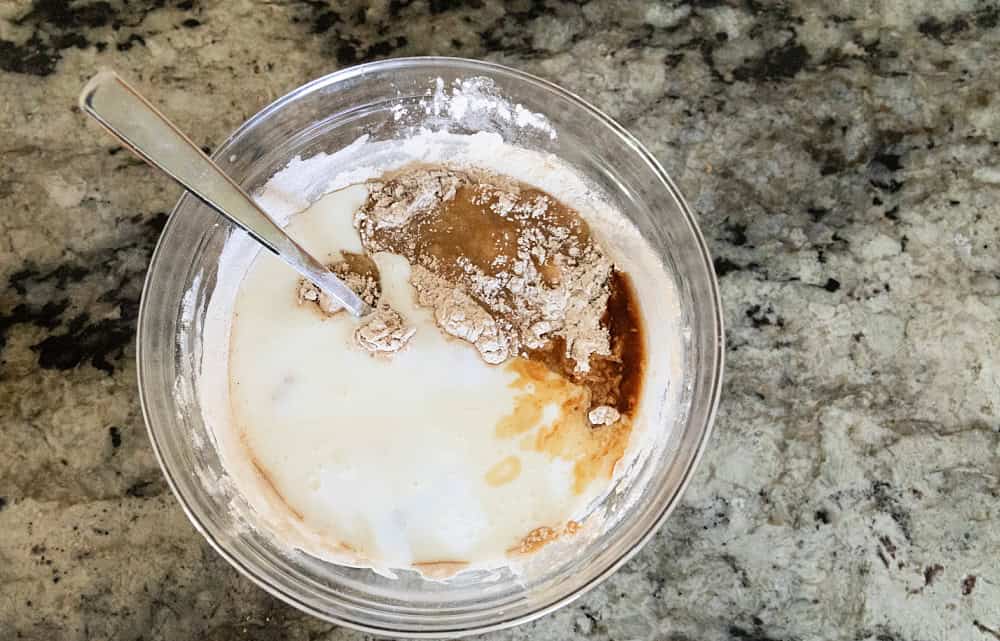
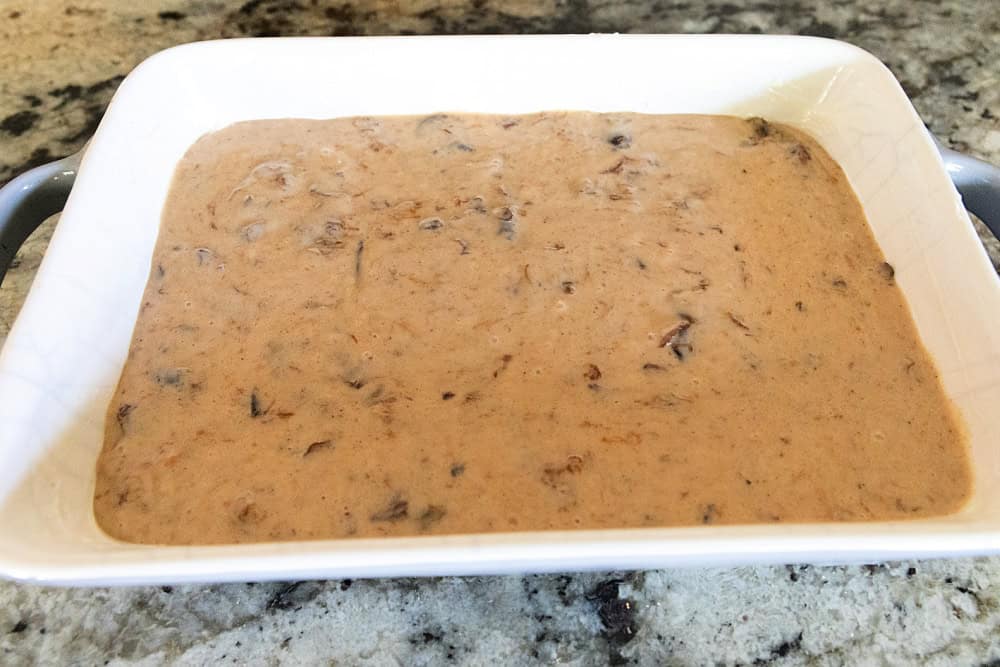
Finish the batter: Add the dry ingredients to the wet ingredients, followed by the buttermilk and vanilla, and stir gently until just combined. Fold in the cooked, mashed prunes until evenly incorporated, then spread the batter into the prepared 9×13-inch baking dish.
Bake the Prune Cake
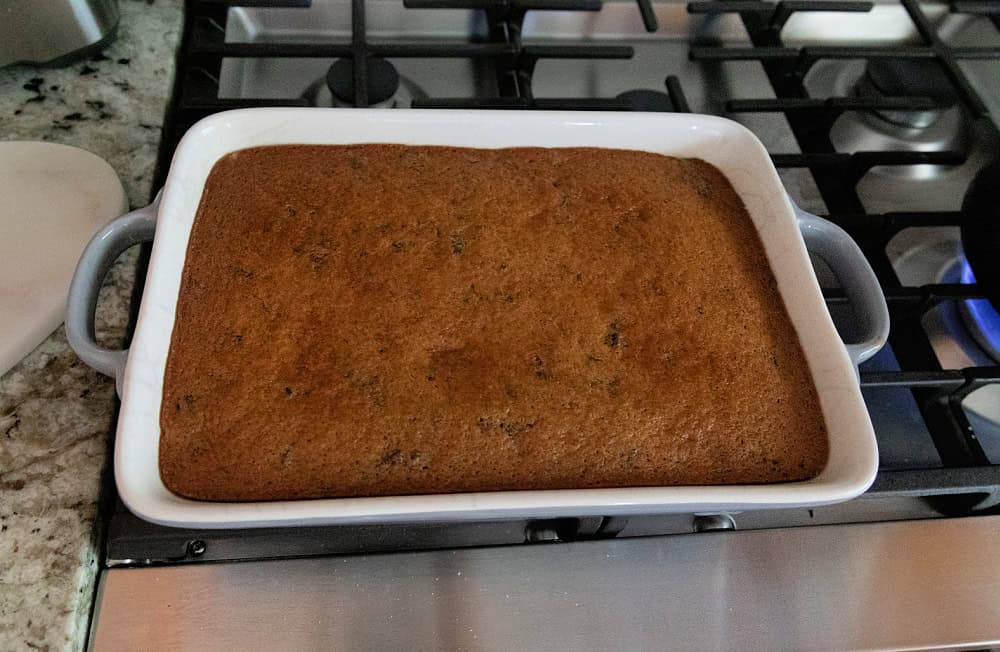
Bake the cake: Bake at 300°F for 35 to 40 minutes, until the cake is set and a toothpick inserted near the center comes out clean or with a few moist crumbs. The cake will be relatively thin in the 9×13-inch pan, which helps the glaze soak into the top.
Make the Buttermilk Glaze
Start the buttermilk glaze: When the cake has about 5 minutes left to bake, combine the sugar, water, buttermilk, baking soda, butter, and vanilla in a medium saucepan. Bring the mixture to a slow boil over medium heat. It will initially be pale and foamy as it begins to boil.
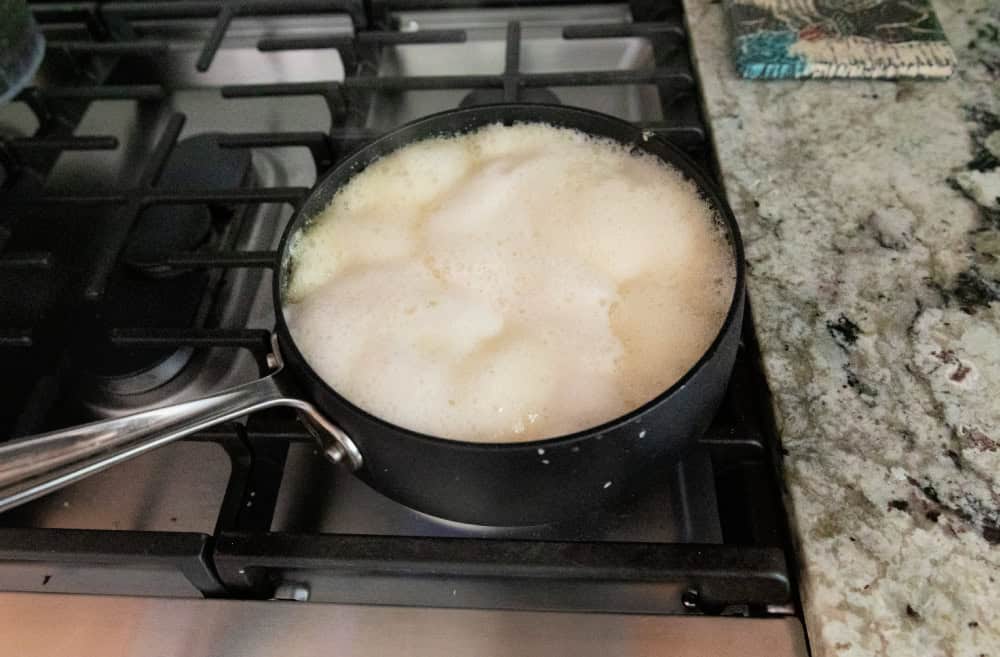 Cook until golden: Continue boiling the glaze without stirring for 5 to 7 minutes, watching the color closely. It’s ready when it deepens to a golden caramel color but is still thin enough to pour easily. Don’t cook it to the soft-ball stage or until it becomes thick and sticky.
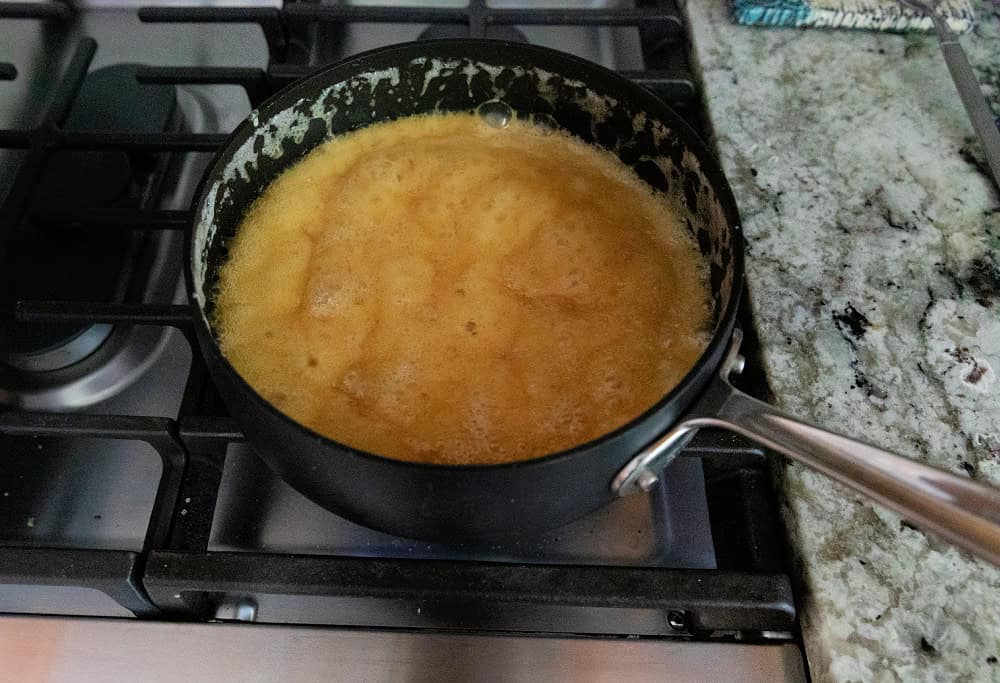
Glaze the Cake While It’s Warm
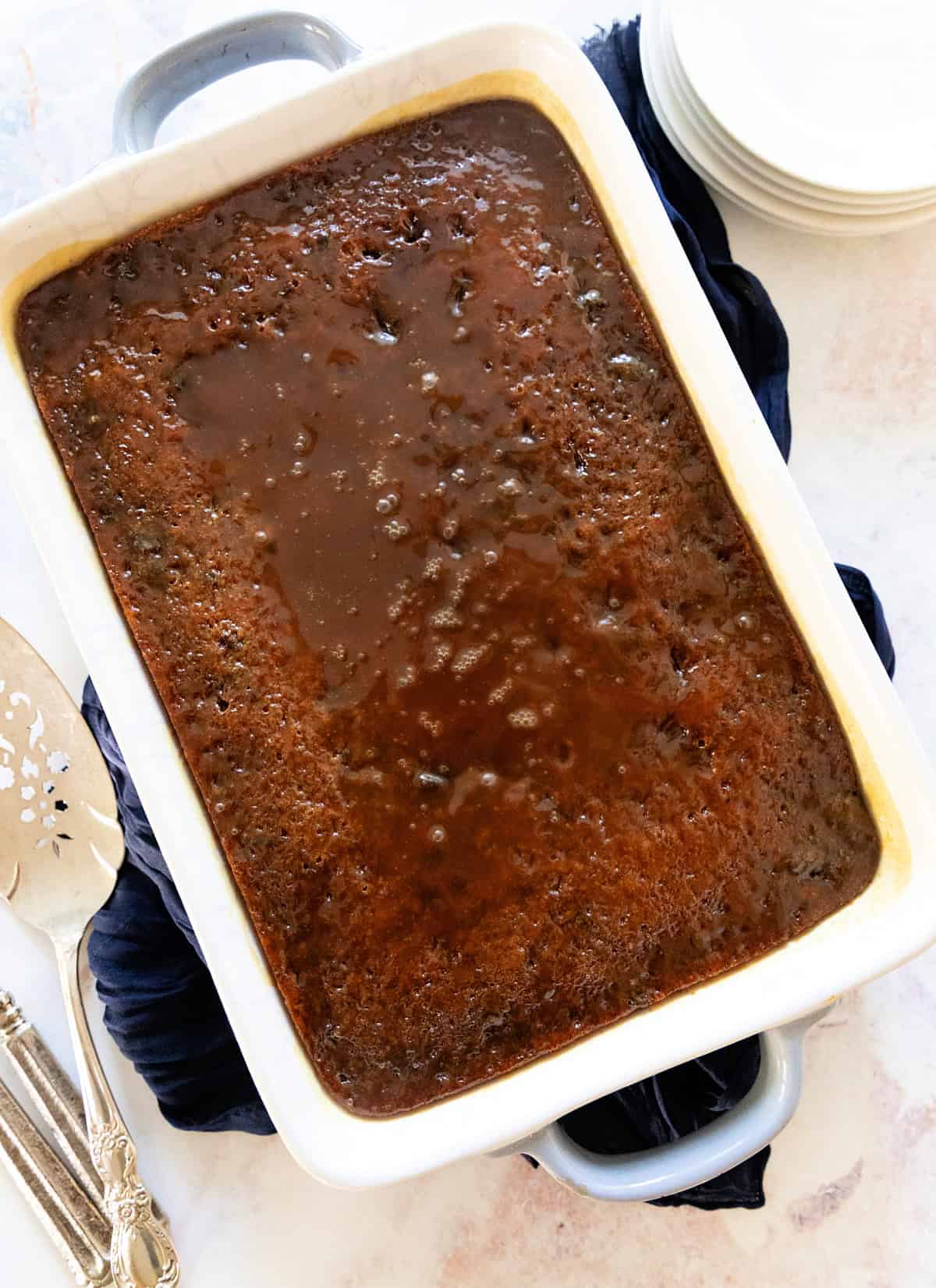
Pour the glaze over the warm cake: As soon as the cake comes out of the oven, slowly pour the hot buttermilk glaze evenly over the top. Let the cake rest so the glaze can settle into the surface before slicing and serving warm.
The Buttermilk Glaze Makes This Cake
The buttermilk glaze is more than just a topping—it’s an important part of what makes this prune cake so good. As the glaze cooks, the butter, sugar, and buttermilk develop a rich flavor that’s almost caramel-like.
Pouring the warm glaze over the cake while it’s still hot allows some of it to soak into the surface while the rest settles into a sweet, glossy topping. Be sure to spoon or pour it evenly so every slice gets some.
Tips for the Best Prune Cake
This is a forgiving cake, but a few small details will help you get the best texture and make sure the glaze turns out just right.
- Cook the prunes until very soft. They should mash easily so they blend naturally into the cake batter.
- Don’t be tempted to increase the oven temperature. The 300°F baking temperature is intentional and helps the cake bake gently while retaining its moisture.
- Don’t overbake. Check the cake toward the end of the baking time and remove it when a toothpick inserted in the center comes out clean or with a few moist crumbs.
- Time the glaze with the cake. Have the glaze warm and ready to pour shortly after the cake comes out of the oven.
- Pour the glaze over the warm cake. This allows it to settle into the surface instead of simply sitting on top.
- Give it a little time before serving. Letting the cake rest briefly allows the glaze to settle while the cake remains wonderfully warm and moist.
Can I Make Prune Cake with Baby Food Prunes?
Yes! Several readers have asked about using baby food prunes, and they work well as a convenient substitute for cooking and mashing dried prunes.
- Use 1 cup of baby food prunes in place of the cooked prunes in the recipe.
- Choose plain prunes without additional flavors or ingredients when possible.
- There’s no need to cook the baby food first; simply add it where the cooked prunes are called for in the recipe.
- The finished cake will still have the moist texture and gently sweet flavor that makes prune cake so good.
How to Store Prune Cake
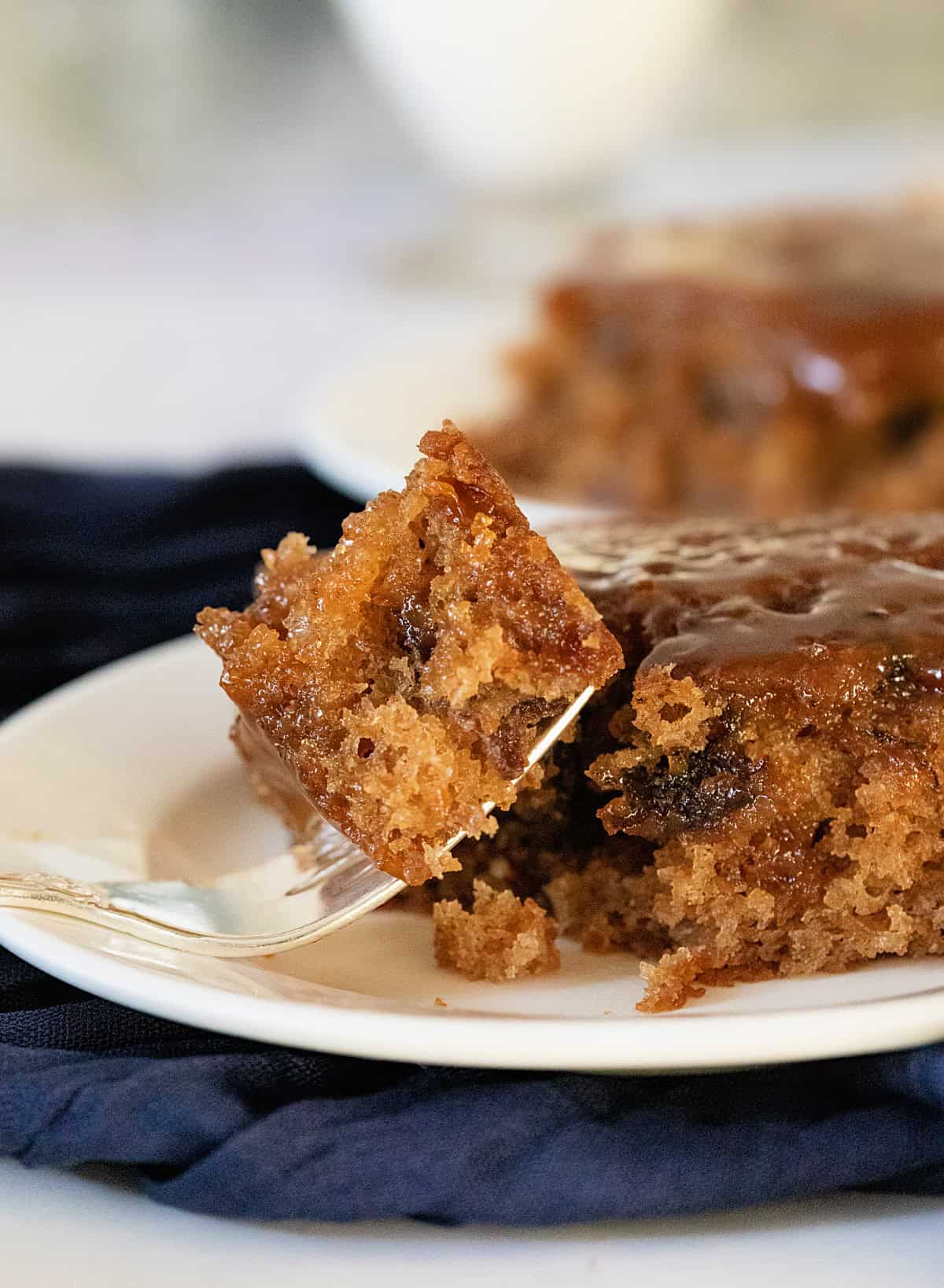
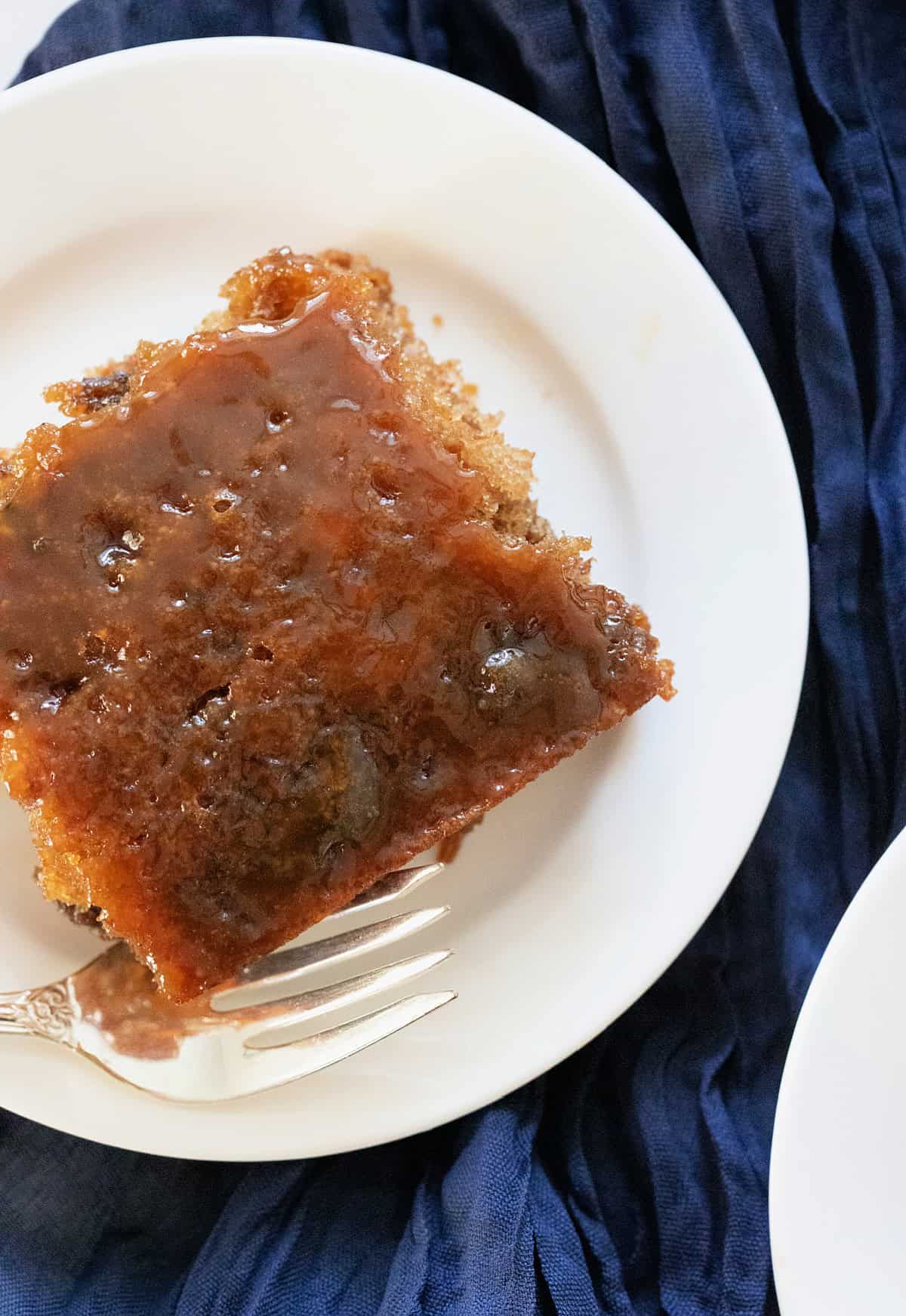
One of the best things about this cake is how well it retains its moisture. Once completely cooled, cover the cake tightly and store it at room temperature for a few days.
- Room temperature: Keep the cake tightly covered so it doesn’t dry out.
- Refrigerator: For longer storage, refrigerate the covered cake and bring individual slices closer to room temperature before serving.
- Reheating: A slice can be warmed briefly in the microwave if you want to recreate that freshly baked, warm-glaze texture.
- Freezing: The cake can also be frozen for longer storage. Wrap it well to protect it from freezer burn and thaw before serving.
Frequently Asked Questions
Does prune cake taste like prunes?
Not nearly as much as you might expect. The prunes soften and blend into the batter, where they add sweetness and moisture. The predominant flavors in the finished cake are the warm spices, sugar, and rich buttermilk glaze.
Can I use fresh plums instead of dried prunes?
I would stick with dried prunes for this recipe. Their concentrated sweetness and lower water content are part of what gives the cake its characteristic flavor and texture, so fresh plums aren’t a direct substitute.
Why does prune cake bake at 300°F?
The lower oven temperature allows this very moist cake to bake gradually and evenly without drying out around the edges before the center is done. Yes, 300°F is correct!
Can I freeze prune cake?
Yes. Once completely cooled, wrap the cake or individual slices tightly and freeze. Thaw at room temperature before serving, and warm individual slices briefly if you prefer the cake slightly warm.
If you’re looking for an easy, old-fashioned cake that stays wonderfully moist, this prune cake is one worth keeping. The warm spices and sweet buttermilk glaze make it especially comforting, and you may be surprised by just how much the humble prune adds to the flavor and texture of the cake.
Prune Cake with Buttermilk Glaze
Ingredients
For the cake-
- 1 cup Prunes
- 1 cup light olive oil or neutral oil of choice
- 1 cup granulated sugar
- 3 large eggs
- 1 ½ cup all-purpose flour
- 1 tsp baking soda
- 1 tsp ground nutmeg
- 1 tsp ground allspice
- 1 tsp ground cinnamon
- 1 cup buttermilk
- 1 tsp vanilla extract
For the buttermilk glaze-
- 1 cup granulated sugar
- 1 tsp water
- ½ cup buttermilk
- ½ tsp baking soda
- ¼ cup butter
- ½ tsp vanilla extract
Instructions
- Prepare the pan: Preheat the oven to 300°F. Butter a 9×13-inch baking dish and set aside.
- Cook the prunes: Place the prunes in a medium saucepan and cover with water. Bring to a boil and cook until very soft, about 8 minutes. Drain well, then mash the prunes and set aside.1 cup Prunes
- Mix the wet ingredients: In a large bowl, whisk together the oil, sugar, and eggs until well combined.1 cup light olive oil, 1 cup granulated sugar, 3 large eggs
- Combine the dry ingredients: In a separate bowl, whisk together the flour, baking soda, nutmeg, allspice, and cinnamon until evenly combined.1 ½ cup all-purpose flour, 1 tsp baking soda, 1 tsp ground nutmeg, 1 tsp ground allspice, 1 tsp ground cinnamon
- Finish the batter: Add the dry ingredients to the wet ingredients along with the buttermilk and vanilla. Stir gently just until combined. Fold in the mashed prunes until evenly incorporated.1 cup buttermilk, 1 tsp vanilla extract
- Bake the cake: Pour the batter into the prepared baking dish and spread evenly. Bake for 35 to 40 minutes, or until the cake is set and a toothpick inserted near the center comes out clean or with a few moist crumbs. When the cake has about 5 minutes remaining, begin making the buttermilk glaze.
Make the glaze
- Combine the glaze ingredients: Add the sugar, water, buttermilk, baking soda, butter, and vanilla to a medium saucepan. Cook over medium heat until the mixture comes to a slow boil.1 cup granulated sugar, 1 tsp water, ½ cup buttermilk, ½ tsp baking soda, ¼ cup butter, ½ tsp vanilla extract
- Cook until golden: Boil without stirring for 5 to 7 minutes, watching the color closely. The glaze is ready when it turns a deep golden caramel color but is still thin and easily pourable. Do not cook it to the soft-ball stage or until it becomes thick and sticky.
- Glaze the warm cake: Remove the cake from the oven and immediately pour the hot buttermilk glaze evenly over the top. Let the cake rest on the counter so the glaze can settle into the surface before serving.
- Serve: This cake is especially delicious served slightly warm.
Notes
- The 300°F oven temperature is correct. The cake bakes gently at the lower temperature, helping it stay exceptionally moist.
- Cook the prunes until very soft. They should mash easily and blend into the batter rather than remaining in large pieces.
- Baby food prunes can be substituted. Use 1 cup plain baby food prunes in place of the cooked and mashed dried prunes. No cooking is necessary.
- Watch the glaze rather than relying only on the clock. You’re looking for a deep golden color and a thin, pourable consistency. Don’t let it cook until it becomes thick like caramel.
- Time the glaze with the cake. Starting it during the final few minutes of baking allows you to pour the hot glaze over the cake shortly after it comes out of the oven.
- To reheat the whole cake: Warm it in a 200°F oven for about 5 minutes.
- To reheat individual slices: Microwave for about 10 seconds, or just until slightly warm.
Adapted from Pioneer Woman



What a delicious cake! It turned out so moist and full of rich, comforting flavor, while the sweet buttermilk glaze adds the perfect finishing touch. A simple, nostalgic dessert that I’ll definitely be making again!
Thank you, Amy, I’m so glad you liked it!
This is so similar to my Mom’s recipe. She was born in 1924. It’s nice to see it is still appreciated for the delicious cake it is. Growing up, Mom would give us our choice of cake on our birthdays. Don’t laugh…..this was always my choice.
I stumbled on your post looking for ideas on new ways to use the yummy glaze. I think I will try it on my next loaf of banana bread or maybe my pumpkin cookies.
I love this, Beverly! I could totally see myself choosing this cake for my birthday too. Love your ideas for other uses for the glaze! I think I’ll try it on one of my next banana bread loaves, too.
My Grammy made the best prime cake. For my birthday I wanted prime cake too as the other person mentioned!!!! This is similar but we used regular milk. No sauce on top. I look forward to trying this addition!!!
Thanks, Shelly! We love this recipe and I hope you will too.
Can you use fresh prunes to make this recipe?
Hi Patty, do you mean plums? This recipe calls for dried prunes and if you used plums, the moisture level and flavor are completely different. I don’t recommend it.
Everyone LOVED it!!! It was a total hit. Most people had at least 2 if not 3 peices. I was glad I made two! Thanks for sharing Sally 🙂
My most favorite dessert! Your recipe looks amazing! I think I’ll make this for Christmas.
Oh my this recipe sounds like my mama’s! Got to try it for sure! I remember her using sour milk not buttermilk. The glaze sounds like how she made it too! Thanks!
Hi Pat! I’m so glad you found this recipe and hope you give it a try. Let me know how it compares to your mama’s recipe, I’d be honored if it is similar. 🙂
Can I ask, is it possible to freeze this cake?
Hi Meredith, I never have but I don’t see any reason that you couldn’t. Since the cake has a buttermilk glaze, however, you might need to reheat the cake a little in the oven before serving (rather than just bringing to room temperature). I would bring the cake to room temperature, preheat the oven to 300 degrees and put the cake in for around 10 minutes or so. Watch it though and bring it out just after you can tell the glaze is not thick. This cake is amazing, I hope you like it!
Looks divine. Can this be baked in a Bundt pan and if so, do I need to adjust the temp and cooking times?
Cannot wait to try this.
Hi Mari, I’ve never made this in a bundt pan and I don’t recommend doing so with this recipe, at least. I don’t think there’s enough batter to fill a bundt pan as this is a rather thin cake.
I have made this in a bundt cake pan. There is enough batter to make the bundt cake, however, the icing does not go through the cake thoroughly like it does in a flat pan. It’s still delicious though!
Hi Jen, I’m glad you still liked the Prune Cake made in the bundt pan. Part of the success of the buttermilk glaze depends on the cake being thinner. I’m glad you still liked it though.
300 degrees? I’m going to try this but want to make sure that temp is right……
Hi Meredith! Yep, 300 degrees is correct. The cake is kind of thin so 300 is the perfect temperature to bake but also ensure a moist result. You have me craving it now. Thanks for stopping by to ensure it’s correct. Let me know what you think of it! 🙂
I have been looking for a prune cake and this looks delicious. I am curious about whether the prunes need to be peeled or just put it all in.
Hi Pam, just put in the prunes as is. No need to peel them at all. Glad you found the recipe, it’s incredibly moist and flavorful. Thanks for stopping by!
What a sleeper this is! Totally unexpected! The cake came out so moist and delicious! I was actually surprised how it came out, not as “prune-y” as I thought, it was very sweet and mild, actually this goes great with wine! I would pair with a Sancerre after a light Lunch. If it were red meats for dinner like a steak or Lamb go with a Cabernet or Pinot Noir then just keep it flowing with this wine friendly dessert.
Thanks Chris, I agree, this cake is such a delightful surprise when tasted. Love the wine pairing. Thanks for the recommendation!
I use strained baby food prunes instead of cooking prunes. No one has noticed yet.
Wow I love this idea, Patrica! You have me craving this delicious cake again and I’ll be using the baby food prunes and will add a footnote to the recipe. Thanks for sharing!
How much of the strained baby food prunes did you use. When I 1st saw the recipe, I bought the baby food to substitute. I bought 3 jars–is this enough?
Hi Cathy, it was a blog follower who made the cake using baby food prunes. I think she substituted one for one in the recipe so 3 jars is more than enough. You’ll need only one cup of the baby food.